
HTML
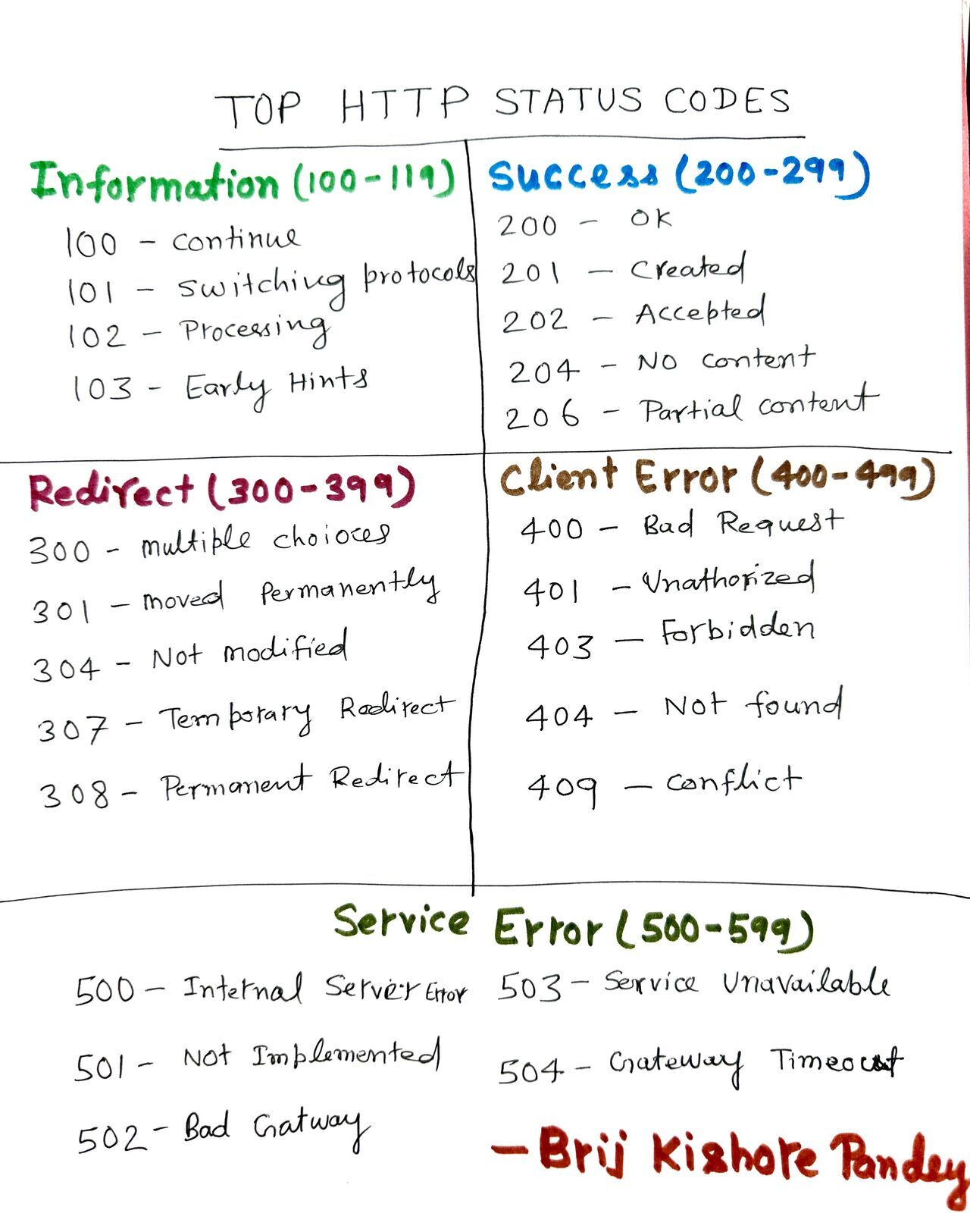
HTTP (Hypertext Transfer Protocol): This is the protocol your web browser uses to request and receive webpages from servers. When you type a URL into your browser, it sends an HTTP request to the server, which then sends back the webpage as a response. HTTP is a "stateless" protocol, meaning each request/response pair is independent.
HTTPS (HTTP Secure): HTTPS is HTTP with an extra layer of security. It encrypts the data exchanged between your browser and the server using SSL/TLS. This helps protect sensitive information (like passwords or credit card numbers) from being intercepted by third parties.
1️⃣ 1xx Informational:
100 Continue: Server received the request header and waits for the client to send the request body.
101 Switching Protocols: Client requested to switch protocols, and the server agreed.
2️⃣ 2xx Success:
200 OK: Standard response for successful HTTP requests.
201 Created: Request fulfilled, new resource created.
204 No Content: Request succeeded, but no new information to send back.
3️⃣ 3xx Redirection:
301 Moved Permanently: Resource has been moved permanently to a new location.
302 Found: Resource temporarily located at a different URL.
304 Not Modified: Cached version of the requested resource is still valid.
4️⃣ 4xx Client Errors:
400 Bad Request: Server couldn't understand the request.
401 Unauthorized: Authentication is required, and credentials are missing or incorrect.
404 Not Found: The requested resource could not be found.
5️⃣ 5xx Server Errors:
500 Internal Server Error: Generic error message from the server.
502 Bad Gateway: Server acting as a gateway received an invalid response from an upstream server.
503 Service Unavailable: Server is not ready to handle the request.
Programming books
https://www.theinsaneapp.com/2021/01/free-programming-books.html
No comments to display
No comments to display