# API
Fundamentals, Design, Architechtural Styles, API Skills, 12 days of APIs, Terminology
# API Fundamentals
In-depth education on API fundamentals, designed for:
• Software developers
• Software engineers
• Data engineers
• Product managers
• Technical program managers
• Anyone eager to learn about APIs
Follow these steps in the specified order to ensure success:
1\. API Fundamentals - [https://lnkd.in/e8eMet\_k](https://lnkd.in/e8eMet_k)
2\. API Simplified - [https://lnkd.in/er9JiGxw](https://lnkd.in/er9JiGxw)
3\. API Methods - [https://lnkd.in/ey9v7-hU](https://lnkd.in/ey9v7-hU)
4\. API Terminologies - [https://lnkd.in/eRsPMzpd](https://lnkd.in/eRsPMzpd)
5\. API Authentication - [https://lnkd.in/eNPfpAdE](https://lnkd.in/eNPfpAdE)
6\. API Status Codes - [https://lnkd.in/egXizUrS](https://lnkd.in/egXizUrS)
7\. REST API vs GraphQL - [https://lnkd.in/eZHREdgC](https://lnkd.in/eZHREdgC)
8\. API Integration - [https://lnkd.in/eDASPP5m](https://lnkd.in/eDASPP5m)
9\. API Integration in Detail - [https://lnkd.in/eZwFVrH7](https://lnkd.in/eZwFVrH7)
10\. API Testing - [https://lnkd.in/emgmWJqH](https://lnkd.in/emgmWJqH)
11\. API with Python - [https://lnkd.in/eM23ah2y](https://lnkd.in/eM23ah2y)
12\. API Scaling - [https://lnkd.in/e3mZSvmn](https://lnkd.in/e3mZSvmn)
13\. Developing Robust APIs - [https://lnkd.in/eBXzbFyg](https://lnkd.in/eBXzbFyg)
14\. APIs with Postman- [https://lnkd.in/ezue3d4B](https://lnkd.in/ezue3d4B)
15\. Testing APIs with Postman - [https://lnkd.in/eCPnGTGi](https://lnkd.in/eCPnGTGi)
16\. API Security - [https://lnkd.in/e79ZYfPa](https://lnkd.in/e79ZYfPa)
17\. APIs for Everyone - [https://lnkd.in/e4WGDffA](https://lnkd.in/e4WGDffA)
# API Design
𝗥𝗲𝘀𝗼𝘂𝗿𝗰𝗲-𝗖𝗲𝗻𝘁𝗿𝗶𝗰 𝗗𝗲𝘀𝗶𝗴𝗻:
• Nouns in URLs: Use descriptive nouns (e.g., /𝚞𝚜𝚎𝚛𝚜, /𝚙𝚛𝚘𝚍𝚞𝚌𝚝𝚜) to represent resources, not verbs indicating actions.
• HTTP Verbs: Leverage HTTP verbs (GET, POST, PUT, DELETE) to denote actions on resources (GET: retrieve, POST: create, PUT: update, DELETE: remove).
• Plural Nouns for Collections: Identify collections of resources with plural nouns (e.g., /𝚞𝚜𝚎𝚛𝚜, not /𝚞𝚜𝚎𝚛).
• Nested Resources: Model hierarchical relationships with nested URLs (e.g., /𝚞𝚜𝚎𝚛𝚜/:𝚞𝚜𝚎𝚛𝙸𝚍/𝚙𝚘𝚜𝚝𝚜).
𝗗𝗮𝘁𝗮 𝗙𝗼𝗿𝗺𝗮𝘁𝘀 & 𝗘𝗿𝗿𝗼𝗿 𝗛𝗮𝗻𝗱𝗹𝗶𝗻𝗴:
• Standardized Formats: Opt for industry-standard data formats like JSON or XML for request and response payloads.
• Descriptive Error Codes: Utilize HTTP status codes (e.g., 200: success, 400: bad request, 404: not found) and provide clear error messages for troubleshooting.
• Validation: Implement robust input validation on the server-side to prevent malformed requests.
𝗣𝗲𝗿𝗳𝗼𝗿𝗺𝗮𝗻𝗰𝗲 & 𝗦𝗰𝗮𝗹𝗮𝗯𝗶𝗹𝗶𝘁𝘆:
• Caching: Utilize caching mechanisms to reduce server load and improve response times for frequently accessed data.
• Pagination: Enable result pagination (e.g., limit, offset parameters) to handle large datasets efficiently.
• Rate Limiting: Implement rate limiting to prevent abuse and ensure fair access for all users.
𝗦𝗲𝗰𝘂𝗿𝗶𝘁𝘆:
• Authentication & Authorization: Enforce proper authentication and authorization mechanisms to control access to sensitive data and functionalities.
• HTTPS: Always enforce HTTPS for secure communication and data encryption.
𝗔𝗱𝗱𝗶𝘁𝗶𝗼𝗻𝗮𝗹 𝗖𝗼𝗻𝘀𝗶𝗱𝗲𝗿𝗮𝘁𝗶𝗼𝗻𝘀:
• Versioning: Implement API versioning to manage changes and ensure compatibility with existing integrations.
• Documentation: Provide comprehensive API documentation covering endpoints, parameters, responses, and code samples.
• Testing: Write thorough unit and integration tests to ensure API functionality and maintainability.
By adhering to these technical best practices, you can create a robust, well-documented, and secure API that empowers developers and fosters a thriving developer ecosystem.
# Archietechural Styles
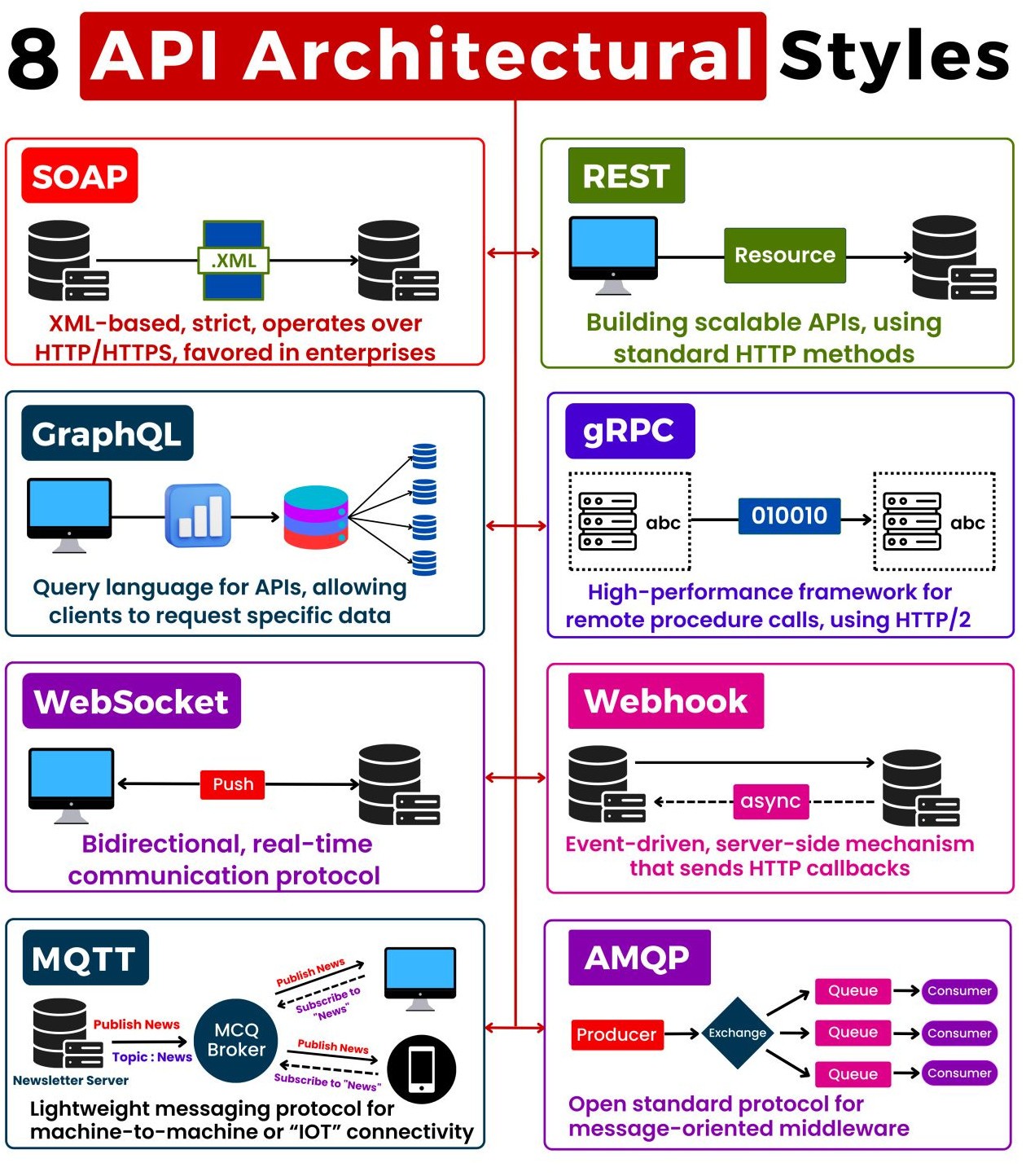
8 API Archietechural Styles
[](https://resources.planforfailure.com/uploads/images/gallery/2024-04/FqLdZPYqpL98vylb-rest.jpeg)
1. API Basics: Learn the fundamentals of APIs and how they work. ([lnkd.in/e8eMet\_k](http://lnkd.in/e8eMet_k))
2. API Made Easy: A simplified approach to understanding APIs. ([lnkd.in/er9JiGxw](http://lnkd.in/er9JiGxw))
3. API Methods: Explore different API methods and their uses. ([lnkd.in/ey9v7-hU](http://lnkd.in/ey9v7-hU))
4. API Terms: Get familiar with common API terminologies. ([lnkd.in/eRsPMzpd](http://lnkd.in/eRsPMzpd))
5. API Authentication: Learn how to secure your APIs with authentication. ([lnkd.in/eNPfpAdE](http://lnkd.in/eNPfpAdE))
6. API Status Codes: Understand the meaning behind API status codes. ([lnkd.in/egXizUrS](http://lnkd.in/egXizUrS))
7. REST API vs GraphQL: Compare and contrast these two popular API architectures. ([lnkd.in/eZHREdgC](http://lnkd.in/eZHREdgC))
8. API Integration: Discover how to integrate APIs into your projects. ([lnkd.in/eDASPP5m](http://lnkd.in/eDASPP5m))
9. API Integration in Depth: Take a deeper dive into API integration. ([lnkd.in/eZwFVrH7](http://lnkd.in/eZwFVrH7))
10. API Testing: Learn how to test APIs for reliability and performance. ([lnkd.in/emgmWJqH](http://lnkd.in/emgmWJqH))
11. APIs with Python: Build APIs using the Python programming language. ([lnkd.in/eM23ah2y](http://lnkd.in/eM23ah2y))
12. API Scaling: Explore strategies for scaling APIs to handle high traffic. ([lnkd.in/e3mZSvmn](http://lnkd.in/e3mZSvmn))
13. Building Robust APIs: Learn best practices for developing reliable APIs. ([lnkd.in/eBXzbFyg](http://lnkd.in/eBXzbFyg))
14. APIs with Postman: Use Postman to design, test, and document APIs. ([lnkd.in/ezue3d4B](http://lnkd.in/ezue3d4B))
15. Testing APIs with Postman: Learn how to test APIs using Postman. ([lnkd.in/eCPnGTGi](http://lnkd.in/eCPnGTGi))
16. API Security: Discover techniques for securing your APIs. ([lnkd.in/e79ZYfPa](http://lnkd.in/e79ZYfPa))
17. APIs for Everyone: An accessible introduction to APIs for all skill levels. ([lnkd.in/e4WGDffA](http://lnkd.in/e4WGDffA))
# API skills
This learning path will guide you from API basics to expert-level knowledge in just a few weeks.
🟣 Foundational Concepts
1\. API Fundamentals - [https://lnkd.in/e8eMet\_k](https://www.linkedin.com/feed/update/urn:li:activity:7010635020587388928/)
2\. API Simplified - [https://lnkd.in/er9JiGxw](https://www.linkedin.com/posts/brijpandeyji_api-made-easy-101-activity-7058662491488182272-lqi4/)
3\. API Terminologies - [https://lnkd.in/eRsPMzpd](https://www.linkedin.com/posts/brijpandeyji_know-all-api-terms-in-7-minutes-activity-7037459481697382401-SYrK/)
🟣 Core Principles
4\. API Methods - [https://lnkd.in/ey9v7-hU](https://www.linkedin.com/feed/update/urn:li:activity:7013900816604385280/)
5\. API Authentication - [https://lnkd.in/eNPfpAdE](https://www.linkedin.com/feed/update/urn:li:activity:7016796096165224448/)
6\. API Status Codes - [https://lnkd.in/egXizUrS](https://www.linkedin.com/feed/update/urn:li:activity:7018435353216704512/)
🟣 Advanced Topics
7\. REST API vs GraphQL - [https://lnkd.in/eZHREdgC](https://www.linkedin.com/feed/update/urn:li:activity:7011345528659562497/)
8\. API Scaling - [https://lnkd.in/e3mZSvmn](https://www.apriorit.com/dev-blog/776-cloud-api-scaling)
9\. Developing Robust APIs - [https://lnkd.in/eBXzbFyg](https://www.linkedin.com/feed/update/urn:li:activity:7039975024140644352/)
🟣 Integration Techniques
10\. API Integration - [https://lnkd.in/eDASPP5m](https://www.linkedin.com/feed/update/urn:li:activity:7023657456207556608/)
11\. API Integration in Detail - [https://lnkd.in/eZwFVrH7](https://snipcart.com/blog/integrating-apis-introduction)
12\. API with Python - [https://lnkd.in/eM23ah2y](https://www.dataquest.io/blog/api-in-python/)
🟣 Testing and Tools
13\. API Testing - [https://lnkd.in/emgmWJqH](https://abstracta.us/blog/software-testing/api-testing-guide/)
14\. Testing APIs - [https://lnkd.in/eCPnGTGi](https://www.softwaretestinghelp.com/api-testing-using-postman/)
15\. APIs with Postman - [https://lnkd.in/ezue3d4B](https://learning.postman.com/docs/designing-and-developing-your-api/the-api-workflow/)
🟣 Security and Accessibility
16\. API Security - [https://lnkd.in/e79ZYfPa](https://www.wallarm.com/what/api-security-tutorial)
17\. APIs for Everyone - [https://lnkd.in/e4WGDffA](https://www.departmentofproduct.com/blog/apis-explained-for-product-managers/)
Strategic Learning Recommendations:
1\. Progress through categories sequentially for optimal skill development.
2\. Each link provides free, vetted content of exceptional quality.
3\. Consistent practice is crucial - aim for regular engagement with APIs.
4\. Revisit earlier topics as needed to reinforce your understanding.
# 12 days of API
12-day roadmap with 𝗙𝗥𝗘𝗘 resources to build a solid API foundation.
Each day, dive into a key concept, sharpen your API skills, and 𝗯𝘂𝗶𝗹𝗱 𝗮 𝗰𝗼𝗺𝗽𝗹𝗲𝘁𝗲 𝗽𝗿𝗼𝗷𝗲𝗰𝘁 by the end.
📌 Day 1: API Fundamentals & Simplified
🔗 [lnkd.in/e8eMet\_k](https://www.linkedin.com/feed/update/urn:li:activity:7010635020587388928/)
🔗 [lnkd.in/er9JiGxw](https://www.linkedin.com/posts/brijpandeyji_api-made-easy-101-activity-7058662491488182272-lqi4/)
📌 Day 2: API Methods & Terminologies
🔗 [lnkd.in/ey9v7-hU](https://www.linkedin.com/feed/update/urn:li:activity:7013900816604385280/)
🔗 [lnkd.in/eRsPMzpd](https://www.linkedin.com/posts/brijpandeyji_know-all-api-terms-in-7-minutes-activity-7037459481697382401-SYrK/)
📌 Day 3: API Authentication & Status Codes
🔗 [lnkd.in/eNPfpAdE](https://www.linkedin.com/feed/update/urn:li:activity:7016796096165224448/)
🔗 [lnkd.in/egXizUrS](https://www.linkedin.com/feed/update/urn:li:activity:7018435353216704512/)
📌 Day 4: REST API vs GraphQL & Integration Basics
🔗 [lnkd.in/eZHREdgC](https://www.linkedin.com/feed/update/urn:li:activity:7011345528659562497/)
🔗[ lnkd.in/eDASPP5m](https://www.linkedin.com/feed/update/urn:li:activity:7023657456207556608/)
📌 Day 5: API Integration in Detail
🔗 [lnkd.in/eZwFVrH7](https://snipcart.com/blog/integrating-apis-introduction)
🔗 [lnkd.in/e4WGDffA](https://www.departmentofproduct.com/blog/apis-explained-for-product-managers/)
📌 Day 6: API Testing Fundamentals
🔗 [lnkd.in/emgmWJqH](https://abstracta.us/blog/software-testing/api-testing-guide/)
🔗 [lnkd.in/eCPnGTGi](https://www.softwaretestinghelp.com/api-testing-using-postman/)
📌 Day 7: API with Python
🔗 [lnkd.in/eM23ah2y](https://www.dataquest.io/blog/api-in-python/)
📌 Day 8: API Scaling
🔗 [lnkd.in/e3mZSvmn](https://www.apriorit.com/dev-blog/776-cloud-api-scaling)
📌 Day 9: Developing Robust APIs
🔗[ lnkd.in/eBXzbFyg](https://www.linkedin.com/feed/update/urn:li:activity:7039975024140644352/)
📌 Day 10: APIs with Postman
🔗 [lnkd.in/ezue3d4B](https://learning.postman.com/docs/designing-and-developing-your-api/the-api-workflow/)
📌 Day 11: API Security
🔗 [lnkd.in/e79ZYfPa](https://www.wallarm.com/what/api-security-tutorial)
📌 Day 12: Final Project - Combine Everything Learned!
(Use all previous resources to build a complete API project)
# Terminology
REST (Representational State Transfer) has become the de facto standard for building web [APIs](https://planforfailure.com/docs/api_terminology.pdf). Its stateless nature, resource-based approach, and standard HTTP methods (GET, POST, PUT, DELETE) provide a clean, predictable interface for client-server communication.
✅ Authentication & Security
API security starts with robust authentication mechanisms. From API keys and JWT tokens to OAuth 2.0 flows, choosing the correct authentication method is critical for protecting your endpoints while maintaining usability.
✅ API Design Principles
Good API design follows predictable patterns:
Use nouns for resource endpoints (/users instead of /getUsers)
Implement consistent error handling and status codes
Version your APIs to maintain backward compatibility
Design with scalability in mind, considering rate limiting and caching strategies
✅ Documentation Standards
Clear, comprehensive documentation is the cornerstone of API adoption. OpenAPI (formerly Swagger) has emerged as the industry standard for describing REST APIs, enabling both human-readable documentation and automated code generation.
✅ Testing & Monitoring
A robust API testing strategy encompasses:
Unit tests for individual endpoints
Integration tests for API workflows
Performance testing under load
Continuous monitoring for availability and response times
These concepts form the foundation of modern API development.